Blog

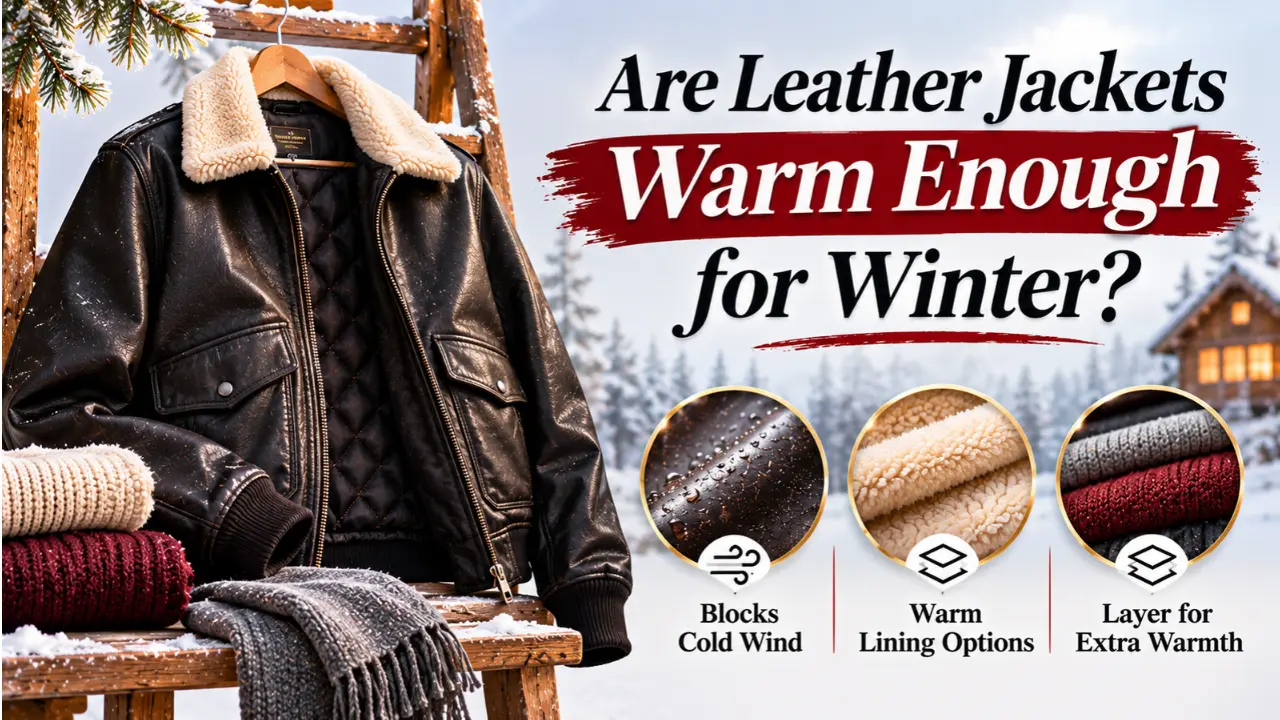
Leather jackets can keep you warm in winter, but their warmth depends on the lining and what you wear underneath. Leather blocks wind effectively, but an unlined jacket offers limited insulation on its own. A shearling or quilted lining, combined with suitable layers, makes a leather jacket a practical choice even in below-freezing temperatures.
Many people buy a leather jacket, wear it in 30°F weather, and find themselves feeling cold. This often leads them to believe leather is unsuitable for winter. However, the problem is usually the lack of insulation rather than the leather itself. Understanding how leather blocks wind, which linings provide warmth, and how to layer underneath can help you choose the right jacket. In this guide, we’ll also explain temperature suitability and when another winter coat may be a better option. Explore our winter collection to find styles designed for colder weather.
The Short Answer
An unlined leather jacket is not a true winter jacket. It works mainly as a wind-resistant outer shell and is better suited to cool and mildly cold weather. A lined leather jacket provides more warmth, while shearling or quilted-insulated leather jackets offer genuine winter protection. Their combination of a wind-blocking leather exterior and an insulating inner layer can provide better warmth than many conventional winter coats. The temperature guide below explains how cold each type of leather jacket can handle.
Why Leather Blocks Wind but Doesn’t Insulate
Leather jackets are excellent at keeping cold air from passing through the outer shell, but blocking wind is not the same as retaining body heat. To understand why some leather jackets feel warm while others do not, it helps to look at how insulation works.
Insulation Is Trapped Air, and Leather Has None
Materials such as down, wool, and fleece keep you warm by trapping small pockets of air within their fibers. This trapped air slows heat loss and helps maintain your body temperature in cold weather. Leather works differently because it is a dense, tightly packed animal hide with no natural loft to hold insulating air. Although a thick leather jacket may feel substantial and heavy, that weight does not automatically make it warm. Leather provides an effective barrier against wind, but it needs an insulating lining to retain enough body heat for winter conditions.
Leather Is Close to Windproof, Which Matters More Than People Think
A tightly finished leather hide creates a strong barrier against moving air, making it highly effective at blocking wind. This matters because wind carries away the warm air surrounding your body, making you feel colder even when you wear thick clothing. A leather jacket helps prevent this heat loss by keeping cold air outside and protecting the layers underneath. A sweater under a leather jacket often feels warmer than the same sweater under a loose wool coat because leather blocks wind more effectively. This combination makes leather a useful outer layer in cold weather, even when the jacket itself has limited insulation.
The Lining Does the Actual Insulating
The lining determines how much warmth a leather jacket provides. An unlined jacket offers little insulation, while polyester and quilted linings add a layer that helps retain body heat. Wool provides additional insulation, and shearling offers even greater warmth through its natural fleece layer. The leather exterior blocks wind, while the lining helps prevent heat from escaping. For this reason, checking the lining description is more useful than judging a jacket by leather thickness or weight alone.
Leather Gets Cold and Stays Cold
Leather can feel cold when you first put it on, especially if you have stored your jacket in a cold car or an unheated room. This happens because leather is a dense material that absorbs and retains temperature from its surroundings. When the jacket is cold, it takes a few minutes of body heat to warm up against you. This initial chill does not mean the leather is too thin or unsuitable for cold weather.
Does Thicker Leather Mean Warmer?
No, thicker leather does not necessarily make a jacket warmer. A thicker hide can improve durability and provide a stronger barrier against wind, but it adds very little insulation on its own. The lining has a much greater effect on heat retention. When choosing a winter leather jacket, focus on its insulation and lining rather than leather thickness alone.
What Temperature Can You Wear a Leather Jacket In?
The temperature range for a leather jacket depends mainly on its lining and insulation. Use the table below as a practical guide to see when unlined leather, quilted leather, and shearling jackets are most comfortable.
| Temperature | Unlined leather | Lined or quilted | Shearling or B-3 |
| 60°F+ (16°C+) | Comfortable | Too warm | Far too warm |
| 50–60°F (10–16°C) | Ideal, worn open or closed | Comfortable | Too warm |
| 40–50°F (4–10°C) | Needs a light layer underneath | Ideal | Warm but wearable |
| 30–40°F (-1–4°C) | Needs a sweater or mid-layer | Comfortable with a base layer | Ideal |
| 20–30°F (-7 to -1°C) | Not sufficient alone | Workable with proper layering | Comfortable |
| Below 20°F (-7°C) | No | Only with a full layering system | Genuine winter outerwear |
Treat These as Guidance, Not Rules
Cold tolerance varies widely from person to person, and activity level also affects how warm you feel. The same jacket that feels comfortable during a brisk walk may leave you cold while standing at a bus stop. Wind and humidity can also make temperatures feel colder than they are. Treat this table as a starting point, then adjust your clothing choices based on your surroundings and personal comfort.
Why Wind Changes Every Number Above
Wind removes the thin layer of warm air that naturally forms around your body, making cold weather feel much harsher. This means a still 30°F day and a windy 30°F day can require very different levels of protection. Leather helps because its dense structure blocks wind more effectively than many fabric shells. As a result, the temperature ranges discussed above remain more reliable in windy conditions than they would with a wool coat that allows more air to pass through.
Which Leather Jackets Are Actually Warm Enough
Not all leather jackets provide the same level of warmth. The difference comes down to the lining and insulation inside the leather shell, which determine whether a jacket suits mild weather, cold days, or freezing temperatures.
Unlined Leather Jackets
An unlined leather jacket is simply an outer shell with no added insulation. It blocks wind effectively and works well in temperatures around 50–60°F, but it offers little warmth on its own below freezing. This is the most commonly sold type of leather jacket, and often the one buyers return because they expect more insulation than it provides. Think of it as a wind-resistant layer, not a winter coat.
Polyester or Satin-Lined Leather Jackets
Polyester and satin linings mainly improve comfort by helping the jacket slide easily over shirts and sweaters. They also create a smoother interior finish, but they do not provide substantial insulation. Compared with an unlined jacket, they may add a little warmth, but not enough to make it suitable for severe cold. Choose this construction for everyday comfort rather than expecting it to perform like a properly insulated winter jacket.
Quilted-Lined Leather Jackets
A quilted lining adds a genuine layer of insulation, making this a more practical choice for cold-weather wear. The stitching creates separate pockets that help trap air around the body. Since this trapped air cannot move around freely, it reduces heat loss and helps retain warmth. The amount of insulation depends on the filling and its thickness, so check the product details rather than relying on the word “quilted” alone. For regular winter use, look for a well-insulated quilted lining that leaves enough room for a sweater underneath.
Wool or Flannel-Lined Leather Jackets
Wool and flannel linings provide more warmth than lightweight satin or polyester interiors. Their thicker construction creates a comfortable insulating layer, while wool can retain some of its insulating ability even when slightly damp. These jackets are generally heavier than lightly lined options and work well for cold everyday conditions. However, their warmth still depends on the lining’s thickness and coverage, so they should not automatically be treated as suitable for freezing temperatures.
Shearling and B-3 Leather Jackets
Shearling jackets offer some of the highest levels of warmth available in leather outerwear. Unlike a standard leather jacket with a separate fabric lining, genuine shearling uses sheepskin with its fleece still attached. The fleece provides insulation by trapping warm air, while the outer hide helps block wind. The B-3 bomber jacket was developed for aircrew operating in unheated aircraft at high altitudes, where ordinary flight jackets could not provide enough protection from extreme cold. This construction makes it suitable for severe winter conditions when properly layered. However, that warmth comes with trade-offs: B-3 jackets are bulkier, heavier, and generally more expensive than standard leather jackets. Explore our shearling jackets and B-3 bomber jackets to compare these cold-weather styles.
Fur-Collared Aviator and Leather Coats
Fur-collared aviator jackets and longer leather coats offer more coverage than standard waist-length bombers. Their extended bodies protect more of your torso and, in some designs, your upper legs. This extra coverage matters in cold weather because it reduces the amount of exposed space between your jacket and other clothing. Aviator styles often feature shearling or fur collars, while longer designs provide added protection below the waist. Explore our leather coats for options with more coverage.
What’s the Warmest Type of Leather Jacket?
A shearling-lined B-3 or aviator jacket is generally the warmest type of leather jacket. Its thick sheepskin construction combines a durable leather outer shell with natural wool insulation on the inside. This lining helps retain body heat in very cold conditions. For maximum warmth, choose a well-fitted design that allows room for a light layer underneath without restricting movement.
How to Layer a Leather Jacket for Winter
A leather jacket blocks wind, while the layers underneath provide insulation, so layering is not a workaround for a weak jacket; it is how the system is meant to work.
Start with a Base Layer, Not a Cotton Tee
Choose a merino wool or synthetic base layer to help move moisture away from your skin. These fabrics manage sweat more effectively, helping you stay dry and comfortable throughout the day. Cotton T-shirts may feel comfortable at first, but they absorb moisture and hold it close to your body. Once damp, cotton loses warmth and can leave you feeling cold, even under a well-made leather jacket. A lightweight, close-fitting base layer creates a better starting point for winter outfits without adding unnecessary bulk.
The Mid-Layer Does the Work
Your mid-layer provides most of the warmth, so choose it according to the temperature and the space inside your jacket. A merino crew-neck sweater, lambswool knit, or thin fleece can provide useful insulation without making your outfit bulky. Thin, dense layers usually work better than thick, loose ones because leather jackets have limited room through the shoulders and arms. If your sweater feels compressed under the jacket, it cannot trap enough warm air to insulate properly. Choose a layer that keeps you warm while allowing your arms and shoulders to move freely.
Buy the Jacket with Layering in Mind
A leather jacket that fits perfectly over a T-shirt may feel too tight when you add a winter sweater. If the jacket pulls across your shoulders or compresses the layers underneath, you lose comfort and insulation. When trying on a jacket, wear the same mid-layer you expect to use during winter. Check that you can zip it comfortably, move your arms, and sit without restriction. Compare your measurements with our size charts before ordering. If standard sizes do not leave enough room for your preferred layers, our custom sizing service lets you request a jacket made to your measurements.
Cover the Gaps
Cold air often enters around the neck, wrists, and waist, so these areas deserve attention. A scarf helps cover the neckline, while gloves protect your hands and wrists from exposure. Also, choose a jacket with a hem that closes comfortably around your waist rather than leaving a large gap. These small adjustments can make a noticeable difference in cold weather. Instead of choosing a heavier leather jacket, focus on covering exposed areas and keeping warm air trapped inside your clothing.
What to Wear Under a Leather Jacket in Winter
Wear a thermal base layer, a warm mid-layer, and a comfortable top under your leather jacket for winter warmth. Start with a moisture-wicking thermal shirt, add a wool sweater or fleece for insulation, and finish with a lightweight layer if needed. Keep each layer fitted enough to avoid bulk and allow comfortable movement inside the jacket.
Riding in Winter Is a Different Question
Everything discussed above assumes you are walking, where your body generates heat, and you are not constantly exposed to moving air. Riding changes the calculation completely because your forward speed creates a steady wind that pulls heat away from exposed areas and puts much greater demands on your jacket.
Riding Creates Its Own Wind
At 50 mph, the air moving past you creates a wind-chill effect even when the weather seems manageable on foot. For example, on a 40°F day, the National Weather Service wind-chill formula gives an equivalent temperature of approximately 25°F at 50 mph. That figure describes the effect on exposed skin, not the temperature inside a properly protected jacket. Still, it shows why a jacket that feels comfortable during a walk may become uncomfortable on a motorcycle. Leather became popular riding gear partly because it helps block this constant airflow.
Why Leather Still Wins for Cold Riding
At riding speed, a jacket’s ability to block wind becomes much more important than it does during an ordinary walk. A well-fitted leather motorcycle jacket creates a strong outer barrier against moving air, while its construction can also provide abrasion resistance if it is designed and made for riding. A regular puffer may offer more insulation when standing still, but it is not a substitute for protective motorcycle gear. Purpose-built textile riding jackets can also provide protection, so the important comparison is between properly constructed riding gear, not leather and ordinary winter fashion jackets.
What to Add for Winter Riding
A leather motorcycle jacket works best in cold weather when you close the gaps where wind can enter. Start with a thermal liner or a windproof mid-layer beneath the jacket to improve insulation without restricting movement. Wear a neck gaiter to cover the gap between your collar and helmet, and choose gauntlet motorcycle gloves that extend over the jacket cuffs rather than leaving your wrists exposed. Check that the jacket’s hem fits securely around your waist so moving air cannot push up underneath it. Explore our men’s motorcycle jackets and motorbike gloves to find riding gear for different conditions.
Know When to Stop Riding
Cold affects riding control before you may recognize how much it has affected you. Numb fingers can make it harder to operate the clutch, brake, and throttle, while shivering can interfere with smooth movements and concentration. Wind exposure can also increase heat loss, making prolonged rides in cold conditions more demanding than expected. If your hands become numb or you start shivering, do not try to push through. Stop somewhere safe, get out of the wind, and warm up before continuing. Your ability to control the motorcycle matters more than completing the ride.
When a Leather Jacket Is the Wrong Choice
Leather jackets offer useful protection against wind and cool weather, but they are not the right solution for every condition. Knowing their limits helps you choose clothing that performs better when temperatures, moisture, or physical activity become more demanding.
Sustained Deep Cold
At consistently sub-zero Fahrenheit temperatures, a down parka with a hood is a better choice than any leather jacket, including shearling. Leather can block wind, and shearling adds insulation, but neither provides the same level of protection as a properly insulated winter parka in extreme cold. If you spend extended periods outdoors in these conditions, prioritize high-performance insulation over leather.
Heavy Rain and Wet Snow
Leather is water-resistant, not waterproof. Light exposure to moisture may be manageable, but prolonged soaking can damage the hide, affect its finish, and leave the jacket heavy and uncomfortable. Wet leather also becomes cold, making it a poor choice for long periods in heavy rain or wet snow. For a consistently wet commute, wear a waterproof outer shell over an insulating mid-layer and leave your leather jacket at home.
High-Exertion Activity
Leather does not breathe as efficiently as technical outdoor fabrics, so it is not ideal for activities that produce heavy sweating. During hiking, strenuous walking, or other high-exertion activities, moisture can build up inside the jacket and leave your clothing damp. Once you slow down, that trapped moisture can make you feel cold. Choose breathable, moisture-wicking layers designed for active use instead.
When You Need a Hood
Most leather jackets do not come with a hood, which can be a drawback during winter rain, snow, or strong winds. If you need regular head coverage, choose a hooded jacket or wear a warm beanie underneath your jacket’s collar. A properly lined leather jacket still offers excellent warmth across the winter conditions most people experience in populated parts of the world.
Keeping a Leather Jacket Alive Through Winter
Winter conditions can affect leather if you leave moisture, salt, or dirt on the surface. A few simple care habits help protect the hide and keep your jacket in good condition.
Road Salt
Road salt can draw moisture from leather and leave visible white marks on the surface. If salt splashes onto your jacket, wipe it away the same day using a clean, barely damp cloth. Avoid scrubbing, soaking the leather, or letting the salt dry in place. Once you remove the marks, allow the jacket to air-dry naturally at room temperature.
Wet Leather
If your leather jacket gets wet, gently remove excess water with a soft, dry cloth. Then lay it flat or hang it on a wide, sturdy hanger in a well-ventilated room. Keep it away from radiators, heaters, and direct heat sources. High temperatures can cause leather to shrink, stiffen, or crack, and this damage may be permanent. Let the jacket dry naturally before storing it.
Conditioning in Winter
Cold outdoor air and dry indoor heating can gradually leave leather feeling dry and stiff. Apply a suitable leather conditioner before winter and again after the season for most jackets. Always test the product on a hidden area first and follow the manufacturer’s care instructions. Avoid over-conditioning, as too much product can affect the leather’s finish.
If you own a fleece-lined shearling jacket, follow different care steps. Read our guide on how to clean a shearling leather jacket to protect both the leather hide and its wool lining.
Final Thoughts
A leather jacket’s warmth depends more on its insulation and construction than on the thickness or weight of the leather. Although leather helps block cold wind, the lining determines how much warmth the jacket retains. Therefore, check the lining material and construction before choosing a jacket for your climate. An unlined leather jacket provides limited insulation and works well for mild fall weather. For colder conditions, a quilted lining offers a practical balance by adding warmth without making the jacket too bulky.
However, if you need substantial insulation for freezing temperatures or motorcycle riding, a shearling-lined jacket is a better choice. Its thick fleece lining helps retain body heat and provides added comfort in harsh weather. Leather thickness can improve durability and wind resistance, but it does not automatically make a jacket warmer. Instead of judging warmth by how heavy a jacket feels, consider its lining, fit, and intended use to find an option that suits the temperatures you regularly face.